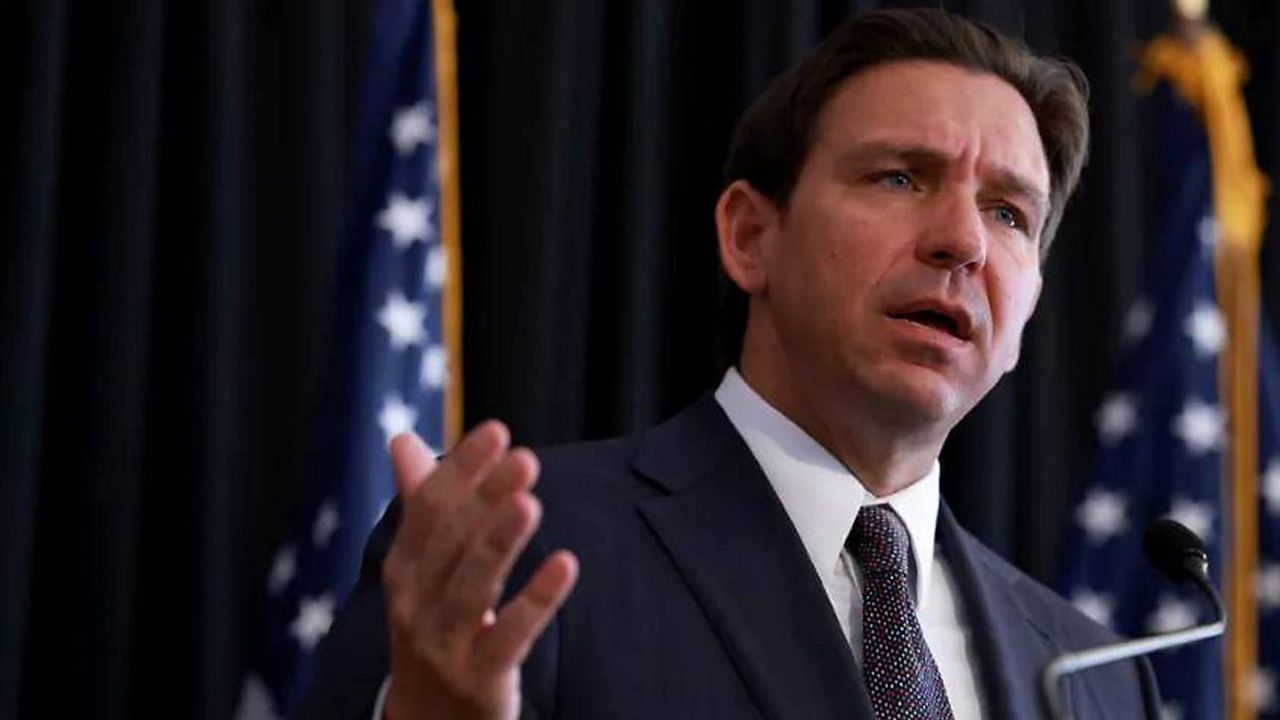
The Fed announced lower interest rates, with plans to lower the rate two more times this year, and Florida Gov. Ron DeSantis discussed his plan to eliminate property taxes.
The Federal Reserve cut its key interest rate by a quarter-point Wednesday and projected it would do so twice more this year as concern grows at the central bank about the health of the nation’s labor market.
The move is the Fed’s first cut since December and lowered its short-term rate to about 4.1%, down from 4.3%. Fed officials, led by Chair Jerome Powell, had kept their rate unchanged this year as they evaluated the impact of tariffs, tighter immigration enforcement, and other Trump administration policies on inflation and the economy.
Yet the central bank’s focus has shifted quickly from inflation, which remains modestly above its 2% target, to jobs, as hiring has grounded nearly to a halt in recent months and the unemployment rate has ticked higher. Lower interest rates could reduce borrowing costs for mortgages, car loans, and business loans, and boost growth and hiring.
“In this less dynamic and somewhat softer labor market, the downside risks to employment appear to have risen,” Powell said at a press conference following the Fed’s two-day meeting.
Fed officials also signaled that they expect to reduce their key rate twice more this year, but just once in 2026, which may disappoint Wall Street. Before the meeting, investors had projected five cuts for the rest of this year and next.
Just one Fed policymaker dissented from the decision: Stephen Miran, who President Donald Trump appointed and was confirmed by the Senate in a rushed vote late Monday just hours before the meeting began. Miran preferred a larger half-point cut, but Powell told reporters there wasn’t “very much support” for the bigger-size cut among Fed officials.
DeSantis discusses his growing push to eliminate property taxes in Florida
Florida Gov. Ron DeSantis continued his efforts to celebrate the nation’s history today. He attended the unveiling of a statue of Benjamin Franklin in the city of Apalachicola.
It’s just the latest in a series of ceremonies the governor has held in a number of northern Florida cities in recent months.
During the event, the governor also addressed another issue he’s been focused on recently, Florida DOGE audits, and property tax relief for Floridians.
“See, the property tax doesn’t come to the state, the state doesn’t levy it, the state doesn’t collect it, and the state doesn’t spend property tax revenue. That’s wholly a function of local government. We’ve got people that are snowbirds that can pay tax, we’ve got people that are investors and they have Airbnbs, which I think has gotten out of hand, they can pay tax. You obviously have commercial, you have all this. But if you’re just a Florida resident and you own a home and that’s your homesteaded property, my vision is that you should own that free and clear of the government, that they shouldn’t be able to charge you rent just to live in your own house,” DeSantis said.
He also highlighted one significant impact that relief could have on people in Central Florida.
“I mean there are some parts of like near the theme parks, you know they have these subdivisions and like most of the homes are Airbnb homes. And it’s like, does that make it easier for someone to afford a house, or does that make it harder? And I think that probably makes it harder. So if you do the tax the way we want to say it, where homesteads are free and clear, oh man that’s going to be so good…”
The governor and some of his allies are hoping to put a property tax relief measure on the ballot for voters to consider in 2026.
In the Florida House, Speaker Daniel Perez has formed a select committee of more than 30 members, which will convene once again next week to consider exactly what form that ballot measure should take.
Bessent said in a press conference after the latest round of trade talks between the world’s top two economies concluded in Madrid that U.S. President Donald Trump and Chinese Premier Xi Jinping would speak Friday to possibly finalize the deal. He said the objective of the deal would be to switch to U.S. ownership.
“We are not going to talk about the commercial terms of the deal,” Bessent said. “It’s between two private parties. But the commercial terms have been agreed upon.”
Li Chenggang, China’s international trade representative, said the two sides have reached “basic framework consensus” to properly solve TikTok-related issues in a cooperative way, reduce investment barriers and promote related economic and trade cooperation, according to China’s official news agency Xinhua.
Li said the two sides had “candid, in-depth” discussions over TikTok and matters of concern to China.
The meeting in Madrid is the fourth round of trade talks between U.S. and Chinese officials since Trump launched a tariff war on Chinese goods in April. A fifth round of negotiations is likely to happen “in the coming weeks,” Bessent said, with both governments planning for a possible summit between Trump and Xi later this year or early next year to solidify a trade agreement.
However, nothing has been confirmed, and analysts say possible trade bumps could delay the visit.
Chinese officials didn’t immediately speak to the media following the Madrid talks, but Chinese Vice Premier He Lifeng, who led the Chinese delegation, was seen smiling when he left the venue.
During Joe Biden’s Democratic presidency, Congress and the White House used national security grounds to approve a U.S. ban on TikTok unless its parent company, ByteDance, sold its controlling stake.
Trump, a Republican, has repeatedly extended the deadline for shutting down TikTok, even though the law allows for just one 90-day reprieve, and only if there’s a deal on the table and a formal notification to Congress.
The current extension expires Wednesday, two days before Trump and Xi are scheduled to discuss the final details of the framework deal. Although Trump hasn’t addressed the forthcoming deadline directly, he has claimed that he can delay the ban indefinitely.
TikTok is one of more than 100 apps developed in the past decade by ByteDance, a technology firm founded in 2012 by Chinese entrepreneur Zhang Yiming and headquartered in Beijing’s northwestern Haidian district.
In 2016, ByteDance launched a short-form video platform called Douyin in China and followed up with an international version called TikTok. It then bought Musical.ly, a lip-syncing platform popular with teens in the U.S. and Europe, and combined it with TikTok while keeping the app separate from Douyin.
Soon after, the app boomed in popularity in the U.S. and many other countries, becoming the first Chinese platform to make serious inroads in the West. Unlike other social media platforms that focused on cultivating connections among users, TikTok tailored content to people’s interests.
The often silly videos and music clips content creators posted gave TikTok an image as a sunny corner of the internet where users could find fun and a sense of authenticity. Finding an audience on the platform helped launch the careers of music artists like Lil Nas X.
TikTok gained more traction during the shutdowns of the COVID-19 pandemic, when short dances that went viral became a mainstay of the app. To better compete, Instagram and YouTube eventually came out with their own tools for making short-form videos, respectively known as Reels and Shorts. By that point, TikTok was a bona fide hit.
Challenges came in tandem with TikTok’s success. U.S. officials expressed concerns about the company’s roots and ownership, pointing to laws in China that require Chinese companies to hand over data requested by the government. Another concern became the proprietary algorithm that populates what users see on the app.Bessent said in a press conference after the latest round of trade talks between the world’s top two economies concluded in Madrid that U.S. President Donald Trump and Chinese Premier Xi Jinping would speak Friday to possibly finalize the deal. He said the objective of the deal would be to switch to U.S. ownership.
“We are not going to talk about the commercial terms of the deal,” Bessent said. “It’s between two private parties. But the commercial terms have been agreed upon.”
Li Chenggang, China’s international trade representative, said the two sides have reached “basic framework consensus” to properly solve TikTok-related issues in a cooperative way, reduce investment barriers and promote related economic and trade cooperation, according to China’s official news agency Xinhua.
Li said the two sides had “candid, in-depth” discussions over TikTok and matters of concern to China.
The meeting in Madrid is the fourth round of trade talks between U.S. and Chinese officials since Trump launched a tariff war on Chinese goods in April. A fifth round of negotiations is likely to happen “in the coming weeks,” Bessent said, with both governments planning for a possible summit between Trump and Xi later this year or early next year to solidify a trade agreement.
However, nothing has been confirmed, and analysts say possible trade bumps could delay the visit.
Chinese officials didn’t immediately speak to the media following the Madrid talks, but Chinese Vice Premier He Lifeng, who led the Chinese delegation, was seen smiling when he left the venue.
During Joe Biden’s Democratic presidency, Congress and the White House used national security grounds to approve a U.S. ban on TikTok unless its parent company, ByteDance, sold its controlling stake.
Trump, a Republican, has repeatedly extended the deadline for shutting down TikTok, even though the law allows for just one 90-day reprieve, and only if there’s a deal on the table and a formal notification to Congress.
The current extension expires Wednesday, two days before Trump and Xi are scheduled to discuss the final details of the framework deal. Although Trump hasn’t addressed the forthcoming deadline directly, he has claimed that he can delay the ban indefinitely.
TikTok is one of more than 100 apps developed in the past decade by ByteDance, a technology firm founded in 2012 by Chinese entrepreneur Zhang Yiming and headquartered in Beijing’s northwestern Haidian district.
In 2016, ByteDance launched a short-form video platform called Douyin in China and followed up with an international version called TikTok. It then bought Musical.ly, a lip-syncing platform popular with teens in the U.S. and Europe, and combined it with TikTok while keeping the app separate from Douyin.
Soon after, the app boomed in popularity in the U.S. and many other countries, becoming the first Chinese platform to make serious inroads in the West. Unlike other social media platforms that focused on cultivating connections among users, TikTok tailored content to people’s interests.
The often silly videos and music clips content creators posted gave TikTok an image as a sunny corner of the internet where users could find fun and a sense of authenticity. Finding an audience on the platform helped launch the careers of music artists like Lil Nas X.
TikTok gained more traction during the shutdowns of the COVID-19 pandemic, when short dances that went viral became a mainstay of the app. To better compete, Instagram and YouTube eventually came out with their own tools for making short-form videos, respectively known as Reels and Shorts. By that point, TikTok was a bona fide hit.
Challenges came in tandem with TikTok’s success. U.S. officials expressed concerns about the company’s roots and ownership, pointing to laws in China that require Chinese companies to hand over data requested by the government. Another concern became the proprietary algorithm that populates what users see on the app.